|
Volume 01 · № 07 · September 16, 2026 |
|
The
Throughline
|
from CIOPages
|
An Independent Briefing for Technology Leaders |
This issue: you get what you reward. What blockchain's token economies teach about the incentives you set — and how every metric is a contract your people will read closely. |
The Big Read · the feature
Tokenomics for the Enterprise: What Blockchain Economics Teaches About Incentive Design
Blockchain's one durable lesson isn't crypto — it's incentive design. Here's what token economies teach about the metrics and rewards you set, and how they get gamed exactly as written.
Read the full article on ciopages.com →
|
The Corner Office · a short take
The Cynic's Reading of Your KPIs
Every metric you publish is a contract with your people's behaviour, and they will read the fine print more carefully than you wrote it. Announce that engineers are measured on tickets closed, and within a quarter you'll have more tickets, smaller tickets, and a strange reluctance to do the prevention work that creates no tickets at all. This isn't cynicism on their part; it's rational response. People optimise what you measure, especially when pay or status rides on it. The metric you choose is the behaviour you're ordering. So before you launch a KPI, read it the way a cynic would. Ask: how would someone hit this number without doing the thing I actually want? Where's the loophole, the gaming move, the second-order effect? That adversarial reading is your real specification. If the metric survives it, ship it. If it doesn't, you've saved yourself a quarter of watching clever people do exactly the wrong thing — precisely as you incentivised. |
Decoded · in plain terms
Incentive Design
Incentive design is deliberately shaping rewards, metrics, and rules so that individual self-interest produces the collective outcome you actually want. Every published metric is, in effect, a contract about behaviour. The first law of the field is that people optimise what you measure — so a poorly chosen metric will be gamed exactly as specified, not abused. Reward closed tickets and you get more, smaller tickets and less prevention. The useful habit is to read any new incentive the way a cynic would before you launch it: how would someone hit this number without doing the real thing? |
CIO Intelligence Suite · Software
Stop running build-vs-buy in a spreadsheet.
The CIO Intelligence Suite turns the calls you face — build vs. buy, cloud cost, modernization sequencing — into structured, defensible models you can take straight to the board.
Explore the apps →
|
The Toolbox · Free download
Incentive-Design Pre-Mortem
Before you ship a KPI or bonus, predict how it'll be gamed — who wins, who loses, what behaviour it kills — with a second-order-effects grid.
Get the free download →
|
|
Comic Sans
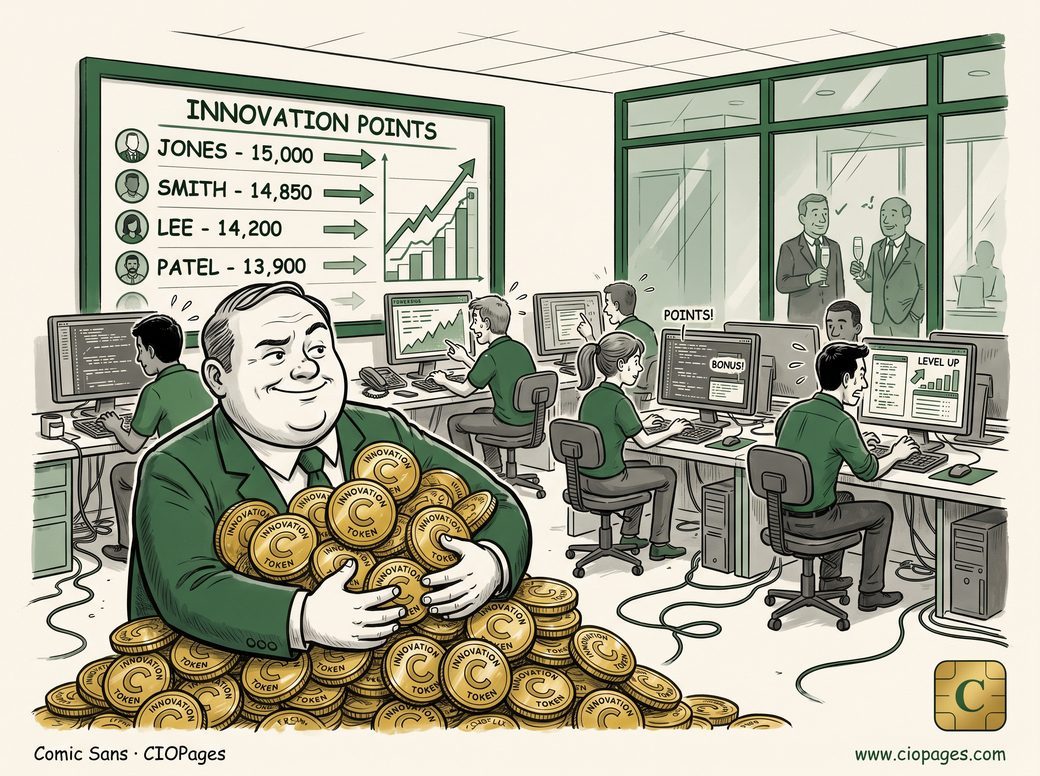
You get exactly what you reward. |
Edge Case
You reward engineers for closing tickets. Within a quarter, predict the three behaviours you'll actually get. |
Verse Control
We rewarded closed tickets, and so
The tickets closed, row upon row.
Each split into four,
Plus prevention? No more—
You get what you pay for, you know.
|
The Store · Digital products
Consumer Retail Business Architecture Toolkit
A ready-to-use business architecture toolkit for Consumer Retail — 300 capabilities, 25 value streams, and a complete data model. Skip months of discovery.
View in the store →
|
Edge Case — the answer
(1) Tickets get split into many small ones; (2) hard or ambiguous tickets get avoided or reclassified; (3) prevention work (which creates no tickets) stops. You optimised for closure, not for fewer problems — exactly as designed. |
Share this issue
LinkedIn
X
Email |
Independent. No sponsorships. No affiliate revenue.
© 2026 CIOPages — A Capstera property. All rights reserved.
You are receiving The Throughline because you subscribed at ciopages.com.
Unsubscribe ·
Privacy · ciopages.com
|